This article is about Western art music to the present. For Western art music from 1750 to 1820, see Classical period (music). For other “classical” and art music traditions, see List of classical and art music traditions. For the magazine, see Classical Music (magazine).
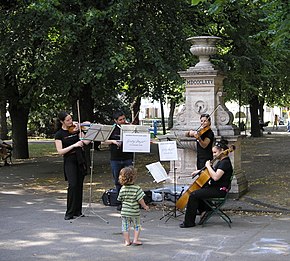
Classical music is art music produced or rooted in the traditions of Western culture, including both liturgical (religious) and secular music. While a more precise term is also used to refer to the period from 1750 to 1820 (the Classical period), this article is about the broad span of time from before the 6th century AD to the present day, which includes the Classical period and various other periods.[1] The central norms of this tradition became codified between 1550 and 1900, which is known as the common-practice period.
Instrumentation and vocal practices
The instruments currently used in most classical music were largely invented before the mid-19th century (often much earlier) and systematized in the 18th and 19th centuries. They consist of the instruments found in an orchestra or in a concert band, together with several other solo instruments (such as the piano, harpsichord, and organ). The symphony orchestra includes members of the string, woodwind, brass, and percussion families of instruments. The concert band consists of members of the woodwind, brass, and percussion families. It generally has a larger variety and number of woodwind and brass instruments than the orchestra but does not have a string section. However, many concert bands use a double bass. The vocal practices changed over the classical period, from the single line monophonic Gregorian chant done by monks in the Medieval period to the complex, polyphonic choral works of the Renaissance and subsequent periods, which used multiple independent vocal melodies at the same time.
 Crane's blog